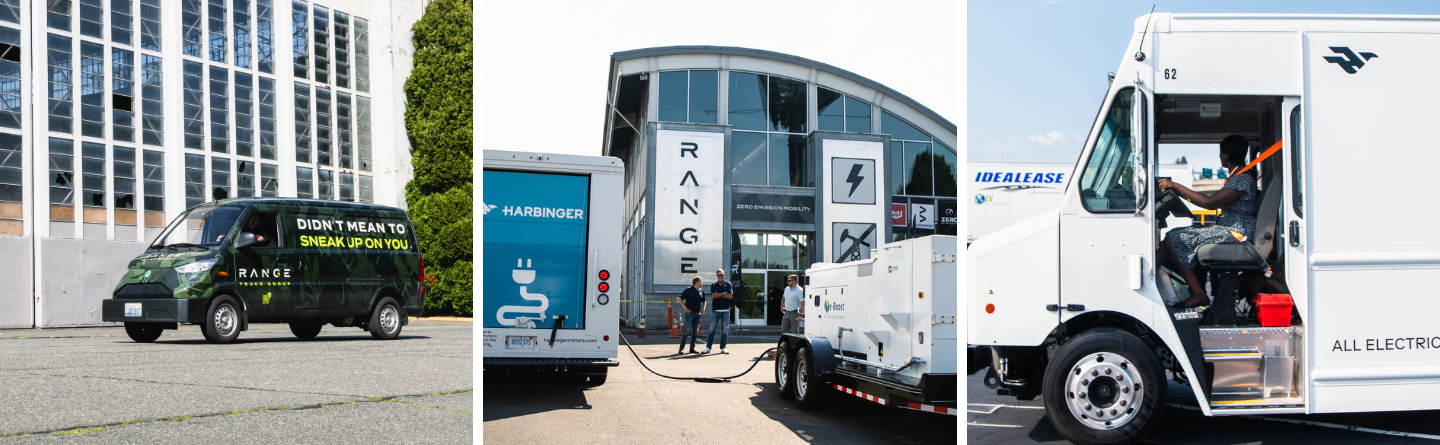

From One Truck to 100: No Commercial Fleet is Too Small for EV Transition
Think your one-truck plumbing business is too small for an electric vehicle conversion? You’re not alone in that assumption, but you might be surprised to learn it’s not the case. The narrative around commercial EV fleets has been dominated by stories of massive corporations electrifying hundreds or thousands of vehicles, creating the false impression that EV transition is only for the big players.
The reality is quite different. Whether you’re a solopreneur with a single service truck or a growing small business with a handful of vehicles, electric commercial vehicles are not only accessible but often make more financial sense for smaller operations than larger ones.
The math is straightforward. When you’re running a lean operation where every dollar counts, the fuel and maintenance savings from a commercial EV for small business operations can have an immediate and meaningful impact on your bottom line. The operational simplicity of electric trucks means less downtime for businesses that can’t afford to have vehicles sitting in the shop.
Why Small Businesses Are Perfect for EV Conversion
Small fleets are American business. The vast majority of commercial vehicle fleets in the United States operate with fewer vehicles than you might expect, with many businesses running between one and five trucks.
Small businesses actually have several distinct advantages when it comes to EV transition. The financial impact of operational savings is more immediate and noticeable when you’re working with tighter margins. While a large corporation might absorb fuel costs as a line item in a massive budget, a small plumbing or electrical contracting business feels every fill-up at the pump.
According to the U.S. Department of Energy, electricity as a fuel typically costs about 60% less than gasoline on a per-mile basis. This cost advantage compounds quickly when you’re filling up several times a week.
Maintenance tells a similar story. Electric vehicles have far fewer moving parts than their internal combustion counterparts—no oil changes, no transmission fluid, no exhaust systems to replace. For a small business that can’t afford to have their primary revenue-generating asset sitting in a repair shop, this reliability advantage is enormous.
Research from the Department of Energy found that while gasoline-powered vehicles cost around 10 cents per mile to maintain, electric vehicles cost only around 6 cents per mile—a 40% reduction in maintenance expenses.
What Does EV Conversion Actually Cost for Small Businesses?
Let’s cut through the speculation and look at real numbers. The answer depends on your specific situation, but we can break down realistic scenarios for different types of small businesses.
- The Operational Savings of Converting 1-3 Service Trucks to EV: Imagine a small plumbing business with one to three service trucks. The vehicles typically carry tools, parts, and equipment, and they make multiple stops throughout the day within a regional service area. This is an ideal use case for commercial EV for small business applications.The operational savings become clear quickly. For a service truck that might drive fifty to one hundred miles per day, five days a week, the fuel cost difference can be substantial. If you’re currently spending several hundred dollars per month on fuel per truck, switching to electricity for charging could significantly reduce those costs. Maintenance savings compound these benefits over time. While a traditional service truck requires regular oil changes, transmission service, brake work, and exhaust system maintenance, electric trucks eliminate most of these scheduled services entirely. For a multi-truck operation, these combined fuel and maintenance savings can add up to tens of thousands of dollars annually. Money that goes directly to your bottom line.
- Last-Mile Delivery: Solo Contractors and Small Fleets are Perfect for EV: Last-mile delivery operations are particularly well-suited to EV fleet solopreneurs. Delivery routes are often predictable, daily mileage falls within comfortable EV range parameters, and the stop-and-go nature of delivery driving is actually where electric vehicles excel most. According to research cited by the Natural Resources Defense Council, current EVs are 2.6 to 4.8 times more efficient at traveling a mile compared to a gasoline internal combustion engine, based on real-world data collected by the U.S. Department of Energy. For a solo contractor running their own delivery operation, consider a typical scenario: you’re driving one hundred fifty to two hundred miles per day, six days a week. With gas prices fluctuating but often hovering around three to four dollars per gallon, and a traditional delivery van getting perhaps twelve to fifteen miles per gallon in city driving, you’re looking at thirty to fifty dollars per day in fuel costs alone. An electric alternative charging at home overnight during off-peak hours might cost five to ten dollars per day in electricity. The difference of six hundred to twelve hundred dollars per month can mean the difference between a struggling operation and a profitable one.
How Small Businesses Can Afford EV Fleet Conversion
The numbers make it clear that electric vehicles make financial sense for small businesses. The question is how to manage the transition financially, especially when you’re working with small business capital constraints.
Financing options for commercial EVs have matured significantly as the market has developed. Many manufacturers and dealers now offer specialized financing programs for electric commercial vehicles, and some programs are specifically designed for small businesses.
For solopreneurs and small businesses, leasing allows you to access the operational cost savings of EV immediately without a large capital spend, and it provides a clear path to upgrade to newer technology as it becomes available. However, if you’re planning to keep the vehicle long-term, purchasing may provide better overall economics once you account for the total savings over time.
Common Questions from Small Fleet Owners on EV
Every business owner considering EV transition has legitimate concerns and questions. Let’s address the most common ones directly.
- What if I only need one truck? Starting with a single electric truck is often the smartest approach. Beginning your small business EV fleet with one vehicle allows you to learn the operational realities of electric on your own terms without betting your entire fleet on a technology you haven’t personally experienced. A single-truck conversion gives you the opportunity to understand charging patterns, experience the maintenance advantages firsthand, and build confidence in the range and capabilities of electric trucks in your specific use case. There’s also no obligation to convert your entire fleet immediately. A hybrid approach where you run one or two electric trucks alongside traditional vehicles can make perfect sense.
- Where do I charge if I don’t have a commercial facility? Charging logistics concern many solopreneurs and small business owners, especially those who operate from home. The good news is that residential charging solutions have become remarkably straightforward and affordable. Most electric trucks can charge on a standard two hundred forty-volt circuit (the same type used for electric dryers or welders). If you have this type of outlet available in your garage or near where you park, you may not need any special installation at all. For solopreneurs working from home, the electricity used for business vehicle charging may be tax-deductible as a business expense. Consult with your tax advisor about the specific rules and documentation requirements. If home charging isn’t possible, public charging infrastructure continues to expand. The Alternative Fuels Data Center maintains a database of public charging stations that shows growing availability in most metropolitan and suburban areas.
- What about range anxiety for service calls? Range anxiety is perhaps the most cited concern about EV adoption, but it’s worth examining whether this concern matches reality for your specific business operations. Most small business vehicles operate on relatively predictable routes within a defined service area. Modern electric trucks designed for commercial use typically offer one hundred fifty to three hundred miles of range per charge, which comfortably covers the daily driving patterns of most small business operations with room to spare. The key is matching your vehicle choice to your actual needs. Route planning tools and apps have made range management straightforward. Most electric vehicles include navigation systems that account for current battery level, terrain, and available charging stations when planning routes. The buffer strategy that experienced EV operators use is simple: plan to use about seventy to eighty percent of your truck’s range on a typical day. This leaves margin for unexpected detours or running the heat or air conditioning without stress.
- Is maintenance really easier? Yes! The maintenance advantage of electric trucks is a fundamental difference. Internal combustion engines have thousands of moving parts, all of which require regular service. Electric motors have remarkably few moving components and require minimal maintenance. Consider what you eliminate entirely with an electric truck: oil changes every few thousand miles, transmission fluid changes, coolant system maintenance, exhaust system repairs, spark plug replacement, air filter changes, and timing belt service. Brake systems in electric vehicles last significantly longer due to regenerative braking, which uses the electric motor to slow the vehicle and capture energy back to the battery. Some EV owners report getting well over one hundred thousand miles from their original brake pads. Warranty coverage on electric commercial vehicles typically includes comprehensive protection for the battery and electric drivetrain, often for eight years or one hundred thousand miles or more. According to the Alternative Fuels Data Center, predictive modeling indicates that today’s batteries may last 12 to 15 years in moderate climates.
Ready to Start Your Small Business EV Fleet?
The technology is proven. The savings are real. But we know the transition can feel daunting, especially when you’re running an operation where every decision matters.
That’s where Range comes in. We’re not pushing idealism or asking you to convert your entire fleet overnight. We’re providing options that let you start small, test electric vehicles in your actual operations, and gradually scale at your own pace. Whether you need one truck or ten, we support every part of the transition—from making the initial business case to helping you trial vehicles before committing.
Explore Range’s Commercial EV Solutions:
Ready to see which electric vehicles might work for your business? Browse our lineup and connect with our team to discuss your specific needs:
- Range’s Electric Semi Trucks Long-haul and regional solutions
- Range’s Last-Mile & Delivery Vehicles Perfect for solopreneurs and delivery fleets
- Range’s Work & Utility Trucks Service trucks for contractors and tradespeople
Unsure where to start? No fleet is too small to make the switch. Let’s find the right starting point for yours.:
- Contact Our Team Get personalized guidance for your fleet
- Subscribe for Updates EV news, industry analysis, and product updates